
Panneaux lettreurs
In excavation photography, letter boards are used as practical photo boards: visible labels that keep the site code, context number, trench, feature or sample reference directly inside the image. This makes each photograph easier to interpret, archive and match with the project photo record after the field season.


Archaeology photo boards and letter boards for field recording
In excavation photography, letter boards are used as practical photo boards: visible labels that keep the site code, context number, trench, feature or sample reference directly inside the image. This makes each photograph easier to interpret, archive and match with the project photo record after the field season.
A good field photograph is not only a clear image. It should also carry the information needed to understand what is being shown. For archaeological recording, the board usually works alongside a metric photo scale, a north arrow for plan views and a vertical scale for profiles or trench sections.
What information goes on an archaeological photo board?
- Site or project code: the unique reference used by the excavation or institution.
- Context, feature, trench or unit number: the identifier that links the image to the written record.
- Sample or find reference: when the photograph documents a specific sample, object or recording point.
- Date, direction or initials: optional fields depending on the project’s recording protocol.
Why use a board instead of filenames only?
Filenames, metadata and notebooks are essential, but they can be separated from the image during export, publication or long-term archiving. A readable board inside the frame keeps the core reference visible even when photographs are reviewed years later, shared with specialists or checked during post-excavation work.
Photo board, scale and north arrow: the standard setup
For context photographs, place the board where it remains readable without hiding the archaeological feature. Add a metric photo scale to give the image a measurable reference. For plans, surfaces and features, add a north arrow. For sections, profiles and trenches, use a vertical scale so the depth and stratigraphy remain clear.
Letter board kits for excavation teams
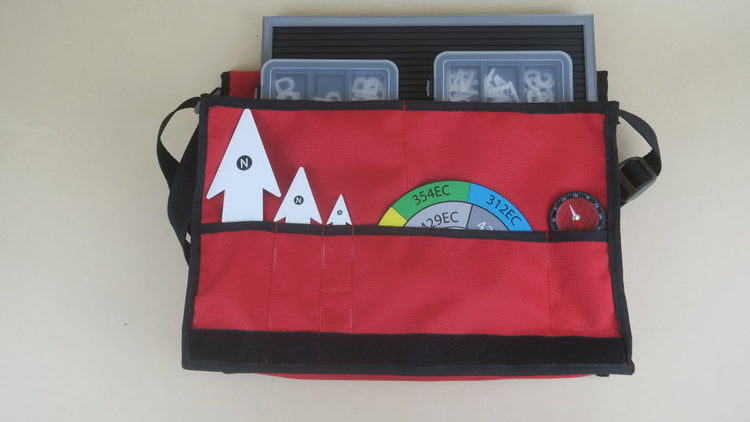
Complete kits are the most practical option for regular fieldwork because they group the panels, characters and storage components needed for everyday documentation. They help excavation teams, museums, universities and field schools keep labelling consistent across many contexts and many photographers.
Build a complete photo record
A letter board or photo board does not replace the site photo log: it supports it. Record each image in your photo register with the file number, context, direction, photographer and relevant notes. For a stronger documentation setup, combine letter boards with archaeological photo scales, north arrows and colorimeters, or complete photo scale kits.